By the time the first piece of steel arrives at a jobsite, the project team has already made decisions affecting cost, schedule, fit-up, and installation. Structural framing has been established, connections have been developed, materials have been selected, and someone has decided how the work should move through fabrication and erection. A conflict found at this point is rarely an isolated drawing problem. The correction might affect purchased steel, shop production, delivery dates, crane access, and work by other trades.
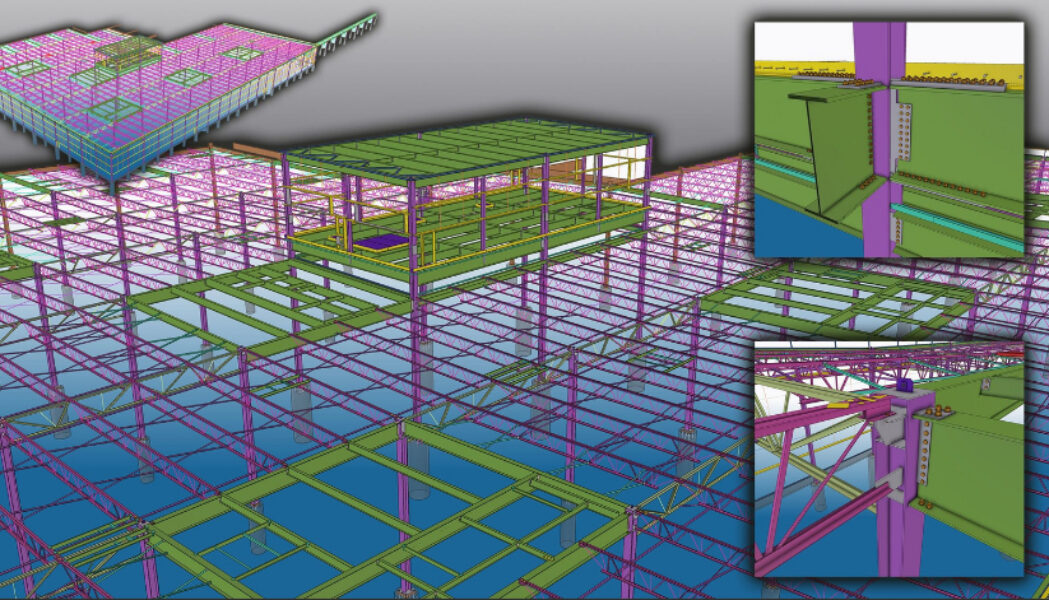
Building information modeling, or BIM, gives teams a clearer way to examine those decisions before construction. A coordinated 3D model shows how steel members, connection plates, braces, stairs, equipment supports, concrete, and surrounding systems relate to one another. Yet the model alone does not determine what deserves attention, who needs to make a decision, or when the answer is required. Those responsibilities belong to preconstruction planning.
At Mid-City Steel, the connection between preconstruction and modeling is especially important. Preconstruction Manager Jake Kozial helps bring project requirements, constructability, material considerations, and schedules into focus while the team still has options. Detailers then use information from that planning process to develop and coordinate steel models. Together, thoughtful early decisions and accurate digital information help reduce conflicts before those conflicts reach the shop or the field.
Preconstruction Gives the Model a Purpose
A detailed model creates value when the project team knows what questions the model needs to answer. Early planning establishes those questions. Which structural areas must be released first? Where will steel intersect major mechanical equipment? Are there unusual connection conditions or restricted access areas? Which parts of the design rely on vendor information that has not arrived? Where will embeds, stairs, rails, or platforms connect to the primary framing?
Without that direction, a modeling team might invest considerable effort developing an area whose design remains fluid while a critical early-release connection receives too little attention. Good preconstruction planning establishes priorities, identifies decision-makers, and creates an information schedule alongside the construction schedule. The model becomes a working coordination tool rather than an impressive picture developed too late to influence the project.
The Return on Early Planning Comes From Avoiding Late Decisions
Project teams often feel pressure to move immediately into shop drawings and purchasing. Time spent reviewing scope or coordinating models might appear to delay visible progress. In practice, early planning helps distinguish decisions that are ready for release from details that still depend on engineering, another trade, or field verification. A small investment in clarification can prevent larger commitments to information that later changes.
Consider a beam supporting both a mechanical unit and an adjacent access platform. If the equipment loads, connection points, and maintenance clearances are established early, the model helps confirm whether the arrangement works before the beam and platform are fabricated. If those inputs arrive after steel production, the same coordination issue might require a redesign, additional material, shop rework, or field modification. The benefit is not a guaranteed percentage of savings. It is the opportunity to resolve the issue while correction remains comparatively manageable.
Clear Scope Creates More Reliable Model Information
Steel contracts draw information from structural and architectural documents, specifications, equipment plans, and construction schedules. Scope gaps often appear where those documents meet. One set of drawings might show a platform without identifying who supplies its connection steel. Another might show an embed without clarifying whether the structural or miscellaneous steel package includes it.
Preconstruction review identifies those boundaries and assigns questions to the responsible parties. A clear scope matrix tells the modeling team which components belong in the steel package and which interfaces need coordination with others. The same clarity improves budgeting because estimators no longer have to make assumptions about every incomplete item. A better-defined model starts with a better-defined scope, and both depend on deliberate conversations before production begins.
Model Coordination Makes Trade Conflicts Easier to See
A beam can fit the structural drawings while occupying space needed by a duct, pipe, conveyor, cable tray, or piece of process equipment. A brace might intersect a door opening. A stair landing might conflict with a wall finish or leave insufficient clearance for adjacent machinery. These issues are difficult to understand when each trade reviews only its own sheets.
Combining current models gives the team a shared view of physical relationships. Detailers and coordinators can isolate an area, rotate the view, check dimensions, and communicate an issue to the appropriate designer. The team still needs to decide which system moves and who approves the change. BIM coordination for steel projects improves visibility, but it succeeds only when engineering, contractor, vendor, and trade responsibilities remain clear.
Clash Detection Is a Starting Point, Not a Final Answer
Clash-checking tools help identify objects occupying the same space or violating defined clearances. Those checks are valuable, yet a useful coordination review goes beyond software-generated interference reports. A bolted connection might show no geometric overlap while leaving inadequate room for a wrench. An assembly might fit around a duct but block future equipment maintenance. A weld might be correctly located in the model while remaining difficult to access during fabrication.
Experienced detailers and fabricators review the reported conflicts and look for those less obvious conditions. Some collisions represent intentional contact, while others need an engineering decision. The goal is not to produce a model with a perfect clash report. The goal is to reach a buildable, approved solution with enough time to act on the information.
Constructability Connects Model Geometry to Shop Reality
A model can show components precisely without revealing the practical effort required to fabricate them. The shop still needs to cut material, prepare joints, fit assemblies, weld, inspect, blast, coat, handle, and ship the finished steel. Plate placement influences welding access. Assembly size influences shop handling and transportation. Complex geometry influences machine selection and fit-up.
Constructability reviews bring fabrication knowledge into the modeling discussion. The team might propose a different assembly split, connection approach, or fabrication sequence for evaluation by the responsible engineer. A modification that simplifies shop access might also change field work, so both settings deserve consideration. The most useful model reflects how the steel will actually be produced and installed, not solely how the finished structure appears on screen.
Planning the Erection Sequence Before Fabrication
The order steel is installed matters to the order steel is detailed, purchased, fabricated, staged, and shipped. A project might need columns and bracing for one bay before beams for a later area. Industrial work might require equipment support steel before surrounding framing closes access. A constrained site might permit only one truck at a time and little space for storage.
Preconstruction brings those field conditions into the schedule before shop priorities are fixed. The model helps the team visualize erection zones, shipping splits, crane access, connection orientations, and the location of pieces needed for each stage. The erector remains responsible for its erection means and methods, but early coordination gives the fabricator more complete information. An otherwise accurate member still creates a problem when it arrives too early, too late, or in an assembly the site cannot handle practically.
Material Decisions Affect Both the Model and the Budget
Member selection is not only a structural design decision. Availability, grades, sizes, plate thicknesses, fabrication effort, and approved alternatives also affect purchasing and schedule. Some shapes or plates face extended lead times, and a size that appears standard in a design database is not necessarily sitting in service-center inventory when the job needs it.
Early planning gives the project team time to check material availability and identify long-lead items. Model-based takeoffs support more focused quantity discussions, while preliminary material packages help the team understand purchasing commitments before full detailing is complete. If an unavailable section creates a schedule concern, the fabricator can raise alternatives for engineering review before shop drawings and connected details are finalized. The model then reflects approved decisions instead of repeatedly rebuilding around late material changes.
Revision Control Protects Work Already in Motion
Steel designs change as projects develop. Equipment vendors update dimensions, engineers clarify connections, and architectural teams refine openings. The difficulty is not the existence of revisions but the possibility that different people are working from different versions of the project. A model change needs to reach the shop drawings, purchasing records, automated equipment data, inspection plans, and sometimes shipping priorities.
Mid-City Steel uses Tekla Structures and Tekla PowerFab within a connected detailing and fabrication workflow. Model information supports drawings and fabrication planning, while production systems help track releases, status, and changes. Those tools improve visibility, but they still require clear approval rules and people who confirm what has been released for production. A preliminary model should never be treated as an automatic instruction to cut steel.
From Coordinated Models to More Accurate Fabrication
The benefits of BIM coordination for steel projects extend into the shop when approved detailing data connects to fabrication operations. Hole locations, cuts, member marks, and plate geometry can feed digitally driven equipment, reducing repeated manual interpretation between drawings and machines. The same underlying information supports piece identification, shop drawings, and erection documentation.
Automation does not remove the need for verification. The fabrication team must confirm the material, setup, orientation, current revision, and first-piece results. Quality personnel still inspect completed work against project requirements. Accurate digital information and disciplined shop checks reinforce each other, helping prevent a modeling or processing problem from becoming a field fit-up problem.
Early Coordination Makes Budget Discussions More Useful
A budget estimate built on incomplete scope and uncertain design inputs contains assumptions. Preconstruction planning helps separate known work from unresolved questions, while model reviews provide better visibility into quantities and challenging conditions. Heavy connections, complicated assemblies, special finishes, unusual shipping dimensions, and sequence-sensitive work become easier to discuss before those costs are embedded in a final detail.
That visibility also helps the team compare options using the complete project rather than the price of one member. A shipping split might add field connections but avoid a costly transportation problem. A different approved detail might improve shop access and reduce difficult field work. A phased purchasing plan might protect an early erection date. These are project-specific decisions, not automatic savings created by software. The value comes from using model information to evaluate tradeoffs while the budget and schedule still have room to respond.
The Preconstruction Manager Helps Turn Information Into Decisions
A project model contains many possible areas for investigation, but someone must connect those areas to the priorities of the job. At Mid-City Steel, Jake’s role as preconstruction manager supports that early alignment. The focus is on understanding what the customer needs, identifying likely risks, clarifying open issues, and helping the project team build a workable path from estimate through fabrication and delivery.
That planning is strongest when it draws on several perspectives. Estimators understand scope and cost drivers, detailers understand connection geometry, purchasing monitors availability, shop personnel understand fabrication methods, and field partners understand installation constraints. Preconstruction brings those concerns together before they become competing demands. The resulting model is more useful because it addresses project decisions rather than developing independently of them.
What Should Happen at an Early Steel Coordination Meeting?
A productive conversation starts with the structure’s most important constraints. The team should identify the first erection area, site access limitations, expected approval milestones, critical vendor information, material concerns, and boundaries between structural and miscellaneous steel. It should also establish which models or drawings each trade will provide, how current information will be shared, and who will resolve conflicts.
Those discussions need action owners and dates. A clash identified without an assigned response remains an unresolved project risk. A model update without an approved release status creates another risk. Consistent communication between the contractor, engineer, fabricator, detailer, erector, and other trades turns the coordination process into practical decisions the shop can follow.
A More Reliable Path From Preconstruction to the Jobsite
The strongest relationship between preconstruction and 3D modeling is a two-way exchange. Planning tells the model what needs to be examined, and the model gives the team better information for planning. Each round of review can reveal a condition that affects scope, material, fabrication, installation, budget, or schedule while changes remain easier to manage.
Mid-City Steel combines preconstruction planning, experienced detailing, Tekla-based modeling, project management, and connected fabrication systems to support that process. BIM coordination for steel projects does not eliminate every conflict, and even a detailed model depends on accurate inputs and timely decisions. Early planning and clear model coordination help prevent avoidable surprises by connecting decisions made in the office to the work performed in the shop and the field.
Planning a steel project with complex connections, multiple trades, long-lead material, or a demanding erection schedule? Talk with Mid-City Steel about preconstruction involvement and model coordination before critical decisions become fixed.