A steel fabrication shop depends on people working close to heavy material, moving equipment, welding operations, cutting systems, and one another. A single lift may involve an operator, a signal person, employees preparing the next piece, and coworkers moving through the surrounding area. Safe work depends on more than the person controlling the crane or machine. Everyone nearby needs to understand the operation and respond when conditions change.
That shared responsibility is central to how Mid-City Steel approaches workplace safety. Company leadership provides direction, resources, training, and clear expectations. Supervisors plan work and reinforce procedures. Employees use the controls required for their assignments, report hazards, and look out for teammates. No individual department owns safety alone because the decisions affecting safety happen throughout the business.
A strong steel fabrication safety culture develops through repeated actions, not one annual presentation or a slogan on the wall. Mid-City Steel emphasizes employee participation, peer accountability, routine hazard identification, documented procedures, and open communication. The purpose behind those practices is straightforward: employees should have the conditions, knowledge, and support to perform their work safely and return home at the end of every shift.
Safety Begins With Leadership and Reaches Every Workstation
Shared responsibility does not mean leadership and employees have identical duties. Management is responsible for providing a safe workplace, appropriate equipment, training, procedures, oversight, and resources for controlling hazards. Supervisors translate those expectations into daily work plans, while employees carry out tasks within approved procedures and communicate when conditions need attention.
Mid-City Steel identifies visible management involvement and accountability at every level as parts of its safety program. Those commitments matter most when safety requires an operational decision: allowing time to plan an unfamiliar lift, addressing a maintenance concern, arranging training for new equipment, or changing a work sequence because a condition is unsafe. Leadership shows its priorities through those choices, while employees reinforce them on the shop floor.
Peer Accountability Means Looking Out for One Another
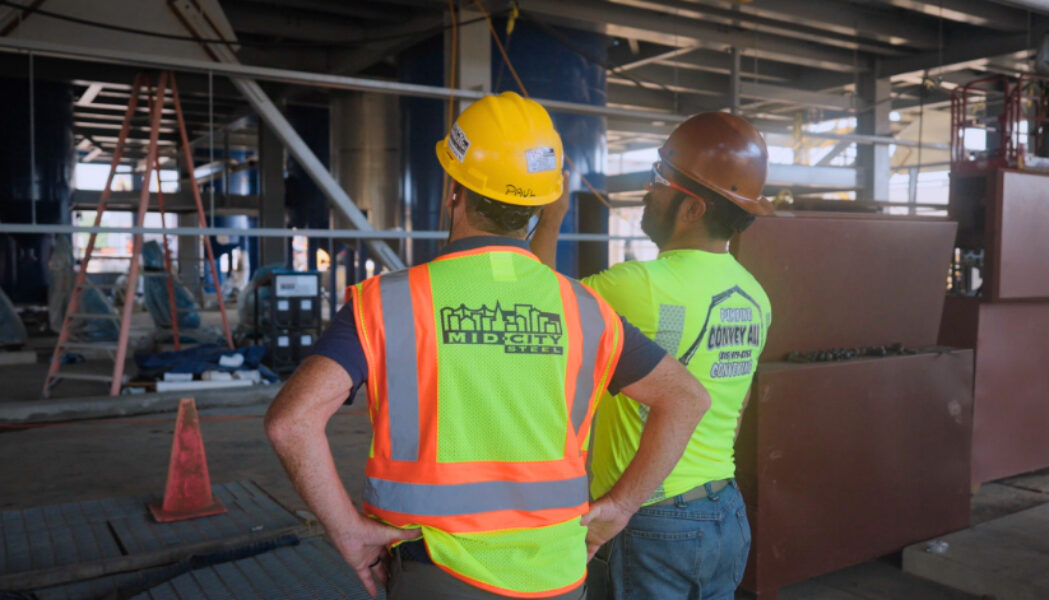
In a busy fabrication facility, one employee often sees a hazard that another employee cannot. A person guiding material might notice a coworker entering a pinch-point area. Someone near a welding station might see sparks reaching unprotected material. An operator might recognize that a travel path has become congested before the next load moves through it.
Peer accountability gives employees a reason to speak up rather than assume someone else will address the concern. The point is not to embarrass a coworker or assign blame. It is to protect people by communicating respectfully, checking assumptions, and correcting conditions before an incident occurs. A team that accepts appropriate reminders and questions builds trust around the work everyone shares.
Planning a Job Includes Planning the Hazards
Production planning addresses material, drawings, machines, labor, and schedule. Safe planning also examines what might expose employees to harm while the task is performed. A new assembly could require an unusual lift, a different fixture, restricted access, or work near another operation. Those conditions deserve attention before people start moving or processing steel.
Mid-City Steel’s safety program includes hazard identification, routine inspections, and job safety analyses for high-risk or critical tasks. The exact review depends on the work, but the principle remains consistent: evaluate the operation, identify hazards, establish controls, and communicate the plan to the people involved. When the setup changes, the plan should be reconsidered rather than treated as permanent.
Material Handling Requires Everyone’s Attention
Heavy steel creates risks even when no cutting or welding is underway. Long beams need room to move, plate can shift if not supported correctly, and overhead handling requires employees to understand the load path and keep clear of hazardous areas. The person operating lifting equipment controls an important part of the process, but nearby workers also need awareness and communication.
Thoughtful material handling includes selecting suitable equipment and rigging, supporting members correctly, identifying travel routes, and coordinating who is involved in the movement. Employees should not position themselves beneath suspended loads or enter hazardous pinch-point areas. If the situation changes during a lift, the team needs to respond rather than continue with an outdated assumption. Careful handling also helps prevent damage to steel and equipment, connecting safety with quality.
Machine Guarding and Energy Control Protect People at the Source
Modern fabrication equipment includes moving parts, pinch points, cutting tools, and automated movements. Machine guards and other safeguards help separate employees from hazardous motion during normal operation. Operators need training in the equipment they use and must understand what conditions require the process to stop for inspection or assistance.
Servicing and maintenance create different risks because unexpected startup or the release of stored energy can injure workers. Mid-City Steel identifies lockout and tagout among its documented safety programs. Appropriate authorized personnel must follow the applicable energy-control procedures when the task requires them, rather than relying on a machine being switched off or assuming another person knows it is being serviced. Clear communication between production and maintenance protects both groups.
Welding Safety Involves the Entire Work Area
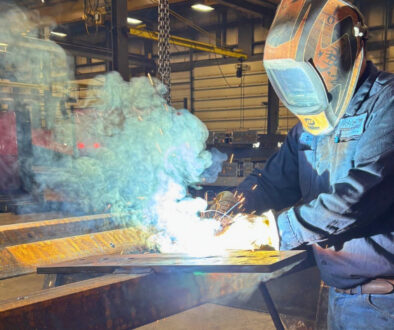
Welding combines heat, sparks, electrical equipment, light, and potential exposure to airborne contaminants. Welders need appropriate controls and protective equipment, but the work can also affect employees nearby. Screening, ventilation, fire precautions, housekeeping, and coordinated work areas help manage conditions beyond the immediate weld location.
A coworker passing through a welding area should not need to guess whether an operation is underway or where exposure might occur. The team needs to maintain clear work boundaries and address combustible materials or other hazards when discovered. Mid-City Steel supports welding safety through job-specific training and documented procedures. Safety works best when everyone treats the surrounding area as part of the operation rather than focusing only on the person holding the welding equipment.
Housekeeping Protects People and Production Flow
A fabrication shop moves material through cutting, fitting, welding, inspection, coatings, and shipping. Each movement creates opportunities for temporary clutter, tools left out of place, loose material, or blocked access. A small obstruction can become more serious when workers carry equipment, maneuver around steel, or respond to an emergency.
Mid-City Steel includes preventive maintenance and housekeeping among its safety priorities. Organized work areas support clear walkways, suitable material storage, access to equipment, and better visibility around active tasks. Housekeeping also reduces wasted time searching for tools or relocating obstacles. The condition of a work area is a shared responsibility because the next person using the space may face hazards left behind by an earlier operation.
Personal Protective Equipment Is One Part of the Plan
Safety glasses, face protection, gloves, hearing protection, welding equipment, and other protective gear each have a role when hazards require them. The correct choice depends on the task and exposure, and employees need training on proper use and limitations. Protective equipment should be readily available and maintained in suitable condition.
PPE does not replace eliminating or controlling hazards wherever practical. Guarding, ventilation, safe material handling, equipment maintenance, and good work planning address risks closer to their source. Mid-City Steel reviews protective-equipment needs alongside training and other controls. This layered approach matters because relying on the final protective barrier alone leaves the workplace more vulnerable when conditions change.
Speaking Up Early Protects the Team
People sometimes hesitate to raise a safety concern because they do not want to delay coworkers or interrupt a tight production schedule. That hesitation is exactly why a healthy safety culture needs open communication. Employees who see an unsafe condition should have a clear way to report it, ask questions, and get the appropriate people involved without fear of retaliation.
Mid-City Steel states that employee engagement includes participation in safety committees, audits, and job planning, along with open reporting of hazards. The company also uses incident and near-miss reporting to identify conditions needing attention. Raising a concern early creates an opportunity to correct the hazard before an injury occurs. A prompt, respectful response helps employees know their input matters and encourages others to speak up when they see a problem.
Near Misses Offer Information Before Someone Gets Hurt
A near miss is an event that did not result in injury but revealed a condition with the potential to cause harm. The absence of an injury does not mean the situation deserves no attention. A swinging load, unplanned equipment movement, or loss of stable material support may reveal weaknesses in planning, communication, or controls even when everyone walks away unharmed.
Mid-City Steel emphasizes investigation and corrective action focused on preventing recurrence rather than assigning blame. Reviewing near misses helps teams ask practical questions. What conditions were present? Did people have current information? Was the equipment or procedure suitable? Did the work change after the original plan? The purpose is to learn from the event and improve the system while the outcome is still an opportunity rather than an injury.
Experience Helps Workers Recognize Changing Conditions
Experienced fabricators often notice details others might miss: a member beginning to shift, a fixture positioned awkwardly, a blocked sightline during a lift, or an unusual sound from equipment. That situational awareness is valuable, but experience is not permission to skip procedures or treat a familiar task casually.
Mid-City Steel’s mix of seasoned personnel and employees learning new skills creates opportunities for mentoring. Newer employees benefit when experienced coworkers explain why certain controls matter, not only what steps to follow. Experienced employees also benefit from questions that challenge assumptions or reveal a process needing review. A steel fabrication safety culture becomes stronger when people at different career stages share observations without treating seniority as a reason to ignore a concern.
Training Must Continue as Technology Changes
Equipment investments change how work gets performed. Automated processing systems, robotic welding, digital controls, and new material-handling arrangements bring advantages, but they also change which hazards employees need to understand. A safe process developed for one machine cannot automatically be transferred to a different system without reviewing the controls.
Mid-City Steel identifies comprehensive onboarding, job-specific training, refresher instruction, and updates when procedures or standards change as part of its program. Training gives employees the information needed to operate equipment, recognize hazards, and respond to abnormal conditions. Ongoing learning is especially important in a shop where technology and production methods continue to evolve.
Safety Involves Visitors, Vendors, and Project Partners
Not everyone entering a fabrication facility knows the hazards of that environment. Visitors, suppliers, service technicians, and contractors may need guidance on where they can travel, what protective equipment applies, and how work areas are controlled. Their activities can also change conditions for employees, particularly when outside personnel service equipment or move materials.
Coordinating responsibilities protects everyone on site. The company hosting the work needs clear expectations and appropriate communication, while outside personnel must follow applicable requirements and share information about their activities. A consistent approach demonstrates that safety standards do not depend on whether a person works in production, management, maintenance, or for another organization.
A Safe Workplace Requires Continuous Improvement
A safety program should adapt when processes, equipment, and risks change. Mid-City Steel identifies regular inspections, preventive maintenance, training, performance review, incident investigation, and shared lessons as parts of its ongoing approach. The goal is to learn before a problem repeats, then communicate improvements so employees understand what has changed and why.
Useful measures include whether hazards are identified and resolved promptly, whether training and inspections occur as planned, and whether corrective actions remain effective over time. Injury statistics alone do not describe every part of a safety culture, particularly when low reporting discourages people from sharing concerns. Open participation and verified follow-through offer a fuller picture of how safety functions in daily work.
Everyone Has a Part in the Outcome
At Mid-City Steel, responsibility for safety reaches from leadership decisions to individual actions at a workstation. Managers provide resources and reinforce expectations. Supervisors coordinate the work. Employees follow procedures, look out for coworkers, and raise concerns when conditions change. Quality, maintenance, material handling, shipping, and support teams contribute because their choices affect the same shared environment.
The strongest steel fabrication safety culture is visible in ordinary moments: a worker checking a lift path, a teammate raising a concern, a supervisor adjusting a plan, and a department sharing lessons from a near miss. Those choices help protect the people whose knowledge and workmanship make Mid-City Steel’s projects possible.
Want to learn more about Mid-City Steel’s approach to safety, training, and teamwork? Explore the company’s safety and culture information or contact the team to discuss how those priorities support demanding steel fabrication projects.