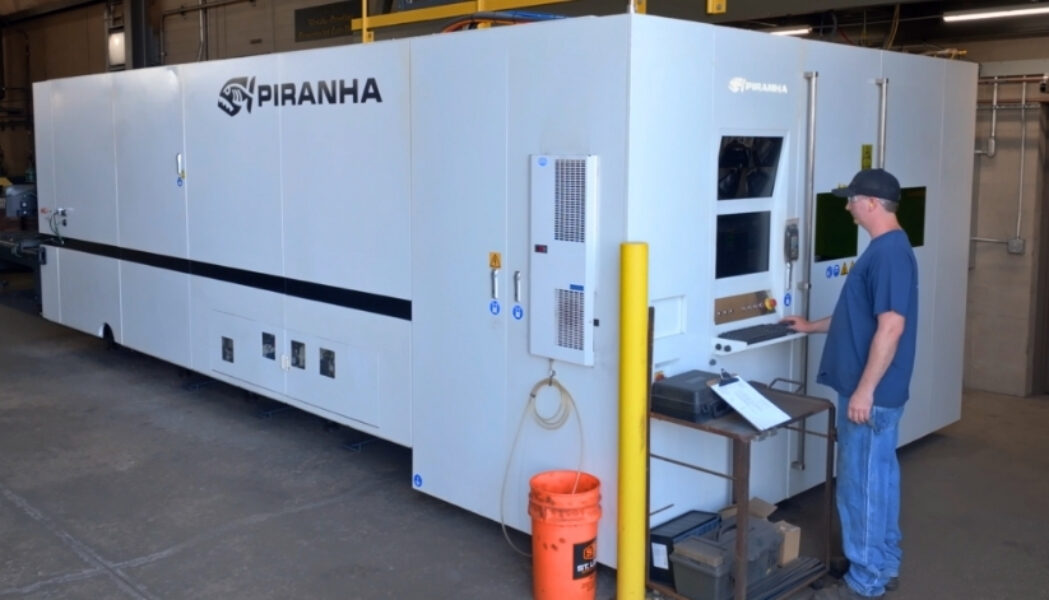
Walk through a modern structural steel fabrication facility and the technology gets your attention quickly. Automated drilling systems process members with speed and repeatability. Robotic coping equipment can make complex cuts. CNC cutting systems turn digital information into precise parts. Robotic welding can perform repetitive welds consistently. Tekla 3D models connect detailing information to fabrication. Integrated production systems help teams track work as steel moves through the shop.
Mid-City Steel continues to invest in advanced steel fabrication technology because these tools can improve productivity, accuracy, consistency, safety, and the ability to take on increasingly complex work. But equipment is only one part of an advanced fabrication operation.
The other part is people.
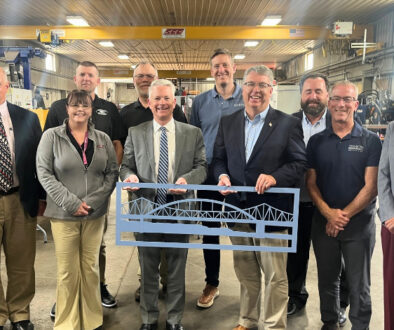
Mid-City Steel’s team brings more than 800 years of collective steel fabrication experience across estimating, detailing, project management, fabrication, welding, coatings, quality control, shipping, and other disciplines required to move a steel project from drawings to the field. That depth of knowledge gives technology context. It helps people recognize when the digital information is right, when a process needs adjustment, when a project condition requires a different approach, and when a small issue could become a larger field problem if it is not addressed early.
In a highly automated facility, experienced operators, detailers, inspectors, welders, project managers, and logistics teams are not less important. In many ways, their judgment becomes even more important because the tools allow decisions to move through the fabrication process faster. The value comes from combining advanced equipment with people who understand steel, drawings, tolerances, constructability, quality requirements, sequencing, and the realities of installation.
People And Technology At A Glance
| Role | Technology / Process | Human Contribution |
| Modeling & Detailing | Tekla Structures, 3D BIM | Translate design information into constructible fabrication details and identify coordination issues before release. |
| Operators & Fabricators | Robotic processing, automated drilling, CNC and laser cutting | Set up, verify, monitor, and adjust production while understanding tolerances, material, sequence, and downstream fit-up. |
| Welding Personnel | Robotic welding and conventional welding processes | Control fit-up, procedures, access, sequence, and conditions while applying automation where it is appropriate. |
| Quality Control | Inspection tools, records, integrated production information | Verify fabricated work against project requirements and identify conditions that require correction or process attention. |
| Project Management | Production tracking and integrated project systems | Coordinate approvals, schedules, procurement, fabrication priorities, coatings, shipping, changes, and field needs. |
Advanced Steel Fabrication Is More Than Equipment
It is easy to define an advanced fabrication shop by the machines on the floor. Equipment matters. Capacity matters. Software matters. But a machine can only execute the information, setup, procedure, and sequence it is given.
That distinction is important on structural steel projects because fabrication is not a series of isolated operations. A beam may begin as a line in a 3D model, become a detailed member with connection information, move through drilling and coping, receive attached plates or assemblies, be welded and inspected, receive a coating system, and then be staged on a load according to the erection sequence. Every step depends on information created or verified earlier in the process.
Automation can make individual steps faster and more repeatable. It cannot eliminate the need for people to understand how those steps connect. If the detail is incomplete, the wrong revision is used, a material condition changes, a tolerance issue develops, or the field sequence is revised, the project still requires human judgment and communication.
That is why Mid-City Steel treats technology as a tool for experienced people rather than a substitute for craftsmanship. The goal is not simply to automate more tasks. The goal is to give the Tough Job Team better tools for producing accurate, inspectable, well-coordinated steel.
Experienced Detailers Make Digital Models Buildable
Automation starts long before a machine touches steel. One of the most important steps happens in modeling and detailing, where engineering and architectural information is translated into fabrication-ready information.
Mid-City Steel uses Tekla Structures and advanced 3D BIM tools to support modeling, detailing, coordination, and fabrication. A 3D model can help teams visualize connections, identify potential interferences, track piece marks, review sequencing, and communicate information across the project. Those capabilities are powerful, but they do not remove the need for experienced detailers.
A detailer has to understand more than how to operate modeling software. The work requires an understanding of how members will be fabricated, where tools need access, how connections come together, how tolerances accumulate, how assemblies can be handled, and how the steel will eventually be erected. A detail that looks correct on a screen still has to work in the shop and in the field.
Experienced detailers also help project teams see problems before they become fabrication problems. A tight connection, unusual geometry, conflicting information, difficult access point, or sequence-sensitive assembly may require additional coordination. The model can make those conditions visible. The detailer has to recognize what they mean and communicate them to the right people.
This is one of the clearest examples of technology amplifying experience. The software gives the detailer a more complete digital environment. Experience helps the detailer know what to look for inside it.
Operators Turn Automation Into Reliable Production
On the shop floor, advanced equipment can perform work that once required substantially more manual layout, cutting, drilling, and handling. Mid-City Steel’s technology investments include Voortman robotic processing equipment, automated drilling, robotic welding, laser cutting, and other digitally driven fabrication systems.
A robotic coping machine, for example, can process steel with impressive speed and precision. But the operator still needs to understand the material being processed, the machine’s capabilities, the programmed information, tooling, tolerances, part orientation, and the fabrication sequence. When something does not look right, an experienced operator needs to recognize it before the problem is repeated across additional pieces.
The same principle applies to automated drilling and cutting. Automation can locate and process features consistently, but operators remain responsible for setup, verification, monitoring, and responding to conditions that fall outside the expected process. Material variation, tooling condition, unusual geometry, or a programming concern can all require a decision that is not simply a matter of pressing start.
Experienced operators also understand downstream consequences. A hole is not just a hole. Its location affects a connection. A cope affects fit-up. A cut length affects assembly. A marked piece has to remain identifiable as it moves through fabrication. Understanding those relationships helps operators protect the integrity of the entire process, not just the operation in front of them.
Robotic Welding Still Depends On Welding Knowledge
Robotic welding is another area where the relationship between automation and experience is easy to misunderstand. Automated welding can provide strong consistency on suitable repetitive work, but the technology still operates within established procedures and physical conditions that have to be understood and controlled.
Experienced welders and welding personnel remain essential for fit-up, joint preparation, procedure requirements, consumables, access, sequence, heat input considerations, distortion, and the many project-specific conditions that influence weld quality. Not every weld or assembly is a good candidate for automation, and even automated processes require knowledgeable people to set up the work and recognize when conditions have changed.
Fit-up is especially important. A robot can follow a programmed path, but the parts it is joining still need to be positioned correctly. Gaps, alignment, joint geometry, surface condition, and assembly variation can affect the welding process. Human experience helps determine whether the physical condition matches what the process expects.
For customers, the benefit of robotic welding is not that people disappear from the process. The benefit is that repeatable automation can be applied where it makes sense while experienced welding personnel continue to control the procedures, fit-up, monitoring, and quality decisions that support the finished work.
Inspectors Verify More Than Machine Accuracy
Advanced equipment can be precise, but precision does not eliminate inspection. Quality control remains a separate and essential layer in structural steel fabrication because project requirements extend beyond whether a machine completed its programmed operation.
Quality-control personnel verify that fabricated work meets project specifications, approved drawings, applicable codes, and established procedures. Depending on the work, that can include dimensional checks, weld inspection, material identification, coating inspection, documentation review, and verification that required corrective actions have been completed.
The distinction between production and inspection is important. A machine may produce a repeatable result, but an inspector evaluates whether that result is the right result for the project. Inspection can also identify patterns. If a dimension begins trending away from the required tolerance or a recurring condition appears, experienced quality personnel can help determine whether the issue is isolated or points to a process that needs attention.
Mid-City Steel’s quality approach is built around the idea that quality is created throughout fabrication, not added at the end. Inspectors play a major role in that system, but quality also depends on operators, welders, detailers, project managers, coating personnel, and others recognizing requirements before the steel reaches final inspection.
Automation supports consistency. Inspection provides independent verification. A reliable fabrication process needs both.
Project Managers Connect The Shop To The Jobsite
Some of the most important human decisions in advanced fabrication happen away from the machines. Project managers are responsible for keeping technical information, approvals, material procurement, fabrication priorities, coatings, shipping, field requirements, and schedule expectations aligned.
That role becomes especially important when a project changes. Revised drawings may affect members that are already detailed or released. An erection sequence may shift. A coating requirement may influence when material can ship. A field condition may require clarification before fabrication continues. A delivery window may change because another trade is not ready.
Production software can make project status more visible, but software does not negotiate those changes or determine the best response for every situation. Project managers have to understand the impact across departments and communicate with owners, engineers, contractors, detailers, the shop, inspectors, coatings personnel, shipping teams, and field crews as needed.
Mid-City Steel’s project managers serve as a central connection between project stakeholders and the fabrication operation. In an automated facility, that coordination helps ensure the shop is not simply producing steel quickly. It is producing the right steel, to the right information, in the right sequence for the project.
Automation Depends On Good Information
One of the biggest advantages of digital fabrication is that information can flow from modeling into production with less manual re-entry. That can reduce opportunities for transcription errors and support efficient processing. It also makes information control more important.
Automation does not automatically know which drawing revision should govern. It does not independently decide whether an engineer’s clarification changes a connection. It does not know that a field request affects a load scheduled for tomorrow unless the project team updates the information and communicates the change.
In other words, automated fabrication is only as reliable as the information feeding it and the controls surrounding that information. Experienced teams help maintain that discipline. Detailers manage model changes. Project managers track approvals and releases. Operators verify jobs before processing. Quality personnel check completed work against the applicable requirements.
This is why a connected fabrication process matters more than any single machine. The most advanced piece of equipment in the shop cannot compensate for disconnected departments or uncontrolled project information. Technology creates the greatest value when everyone is working from coordinated, current information.
Human Judgement Matters Most When The Job Gets Tough
Routine, repeatable work is where automation can be especially effective. Tough projects are where the value of experience becomes easiest to see.
Complex structural steel projects can include unusual geometry, tight tolerances, specialized welding, heavy assemblies, difficult shipping constraints, aggressive schedules, complicated coating systems, or erection sequences that leave little room for error. They can also change while fabrication is underway.
When drawings change, tolerances tighten, schedules move, or unusual fabrication conditions arise, software and automation alone cannot make every decision. Someone has to interpret the requirement, understand the consequences, decide who needs to be involved, and determine the best path forward within the project’s specifications and approved processes.
That judgment is built through experience. A person who has seen similar fit-up issues, sequence conflicts, coating constraints, or field problems can often identify the risk sooner because they understand how a decision made in one department will affect another. Institutional knowledge gives teams a larger library of real-world situations to draw from when the project stops being routine.
Mid-City Steel’s more than 800 years of collective experience is valuable for exactly that reason. It represents knowledge distributed across disciplines, not a single person or department. On difficult work, those perspectives can be brought together to solve a problem before it becomes a larger disruption.
Technology Can Improve Safety, But People Create The Safety Culture
Advanced fabrication equipment can also change how people interact with steel. Automated processing can reduce certain manual layout and cutting tasks, while robotic systems can perform some repetitive operations without requiring a person to remain in the same position throughout the process.
Those advantages can support a safer and more efficient shop, but technology does not create a safety culture by itself. Operators still need training. Equipment has to be used within established procedures. Work areas have to be controlled. Material handling still requires planning.
People need to recognize hazards and stop when conditions are not right.
Mid-City Steel identifies safety as a core value and continues to pair technology investment with training and experienced personnel. That combination is important because a safer process depends on both equipment design and human behavior. The machine may change how a task is performed, but people remain responsible for using the tool correctly and protecting one another around it.
Institutional Knowledge Connects Every Department
A fabrication company’s experience is not valuable only because individual employees know their own jobs. The larger advantage comes from understanding the handoffs between jobs.
A detailer who understands fabrication can create better shop information. An operator who understands assembly can recognize when a processed feature may create a fit-up concern. An inspector who understands production can identify where a recurring issue may be entering the process. A project manager who understands shop flow can make better sequencing and delivery decisions.
That cross-functional understanding is difficult to buy with equipment. It develops over time through training, collaboration, lessons learned, and repeated exposure to real project conditions. New technology can be installed quickly. Building a team that knows how to integrate it into estimating, detailing, fabrication, quality control, coatings, logistics, and field requirements takes much longer.
This is why Mid-City Steel describes its institutional knowledge as one of its important capabilities. More than 800 years of collective experience gives the company a deep base of fabrication knowledge while continued investment in automation gives that experience newer and more capable tools.
What People And Technology Mean For Your Steel Project
For a customer, the people-versus-technology debate is not very useful. A successful steel project needs both. The more relevant question is whether the fabricator has integrated them into a process that supports the project from the model through delivery.
When experienced people and advanced steel fabrication technology work together, project teams can benefit from better visibility, more consistent processing, faster feedback, coordinated information, and stronger control across fabrication. The technology can help the team work efficiently. Experienced people help make sure efficiency does not come at the expense of constructability, quality, or project-specific requirements.
That integration shows up in practical ways. A detailer can use a 3D model to coordinate a complex connection before release. An operator can use automated processing to produce repeated features consistently while monitoring the work. A welder can apply robotic welding where the joint and procedure are appropriate. An inspector can verify that the finished component meets project requirements. A project manager can use production information to coordinate sequencing and delivery with the field.
Customers should therefore look beyond an equipment list when evaluating a steel fabricator. Advanced machines are valuable, but it is equally important to understand who is modeling the work, who is operating the equipment, how quality is verified, how changes are controlled, how departments communicate, and who is responsible for keeping the project aligned from award through shipment.
The Future Of Steel Fabrication Is People Plus Technology
Steel fabrication will continue to become more digital, connected, and automated. Robotics will improve. Production data will become more useful. Modeling will connect more decisions before steel reaches the shop. Equipment will take on additional repetitive and precision-driven tasks.
None of that changes the fundamental need for skilled people. It changes what skilled people can accomplish.
At Mid-City Steel, the goal of automation is not to replace craftsmanship. It is to give experienced people better tools. Detailers can work with more complete digital information. Operators can process steel more efficiently. Welders can use automation where it supports the work. Inspectors can verify results within a controlled quality system. Project managers can coordinate complex schedules with better production visibility.
Behind every one of those tools is a person making decisions about how the steel should be built, inspected, sequenced, handled, and delivered.
That combination of advanced steel fabrication technology and accumulated experience is especially valuable when the job is complex, the schedule is tight, or the details do not leave much room for error. Technology expands capability. People apply judgment. Together, they move the project from a digital model to steel that is ready for the field.
Planning a project that demands advanced fabrication, careful coordination, and experienced problem solving? Talk with Mid-City Steel about your project requirements.